

Spearheading Clinical-Based, Biomedical Engineering Human Performance-Related Research

Rehabilitation Engineering & Assistive technology Center for Human performance (REACH)
Within REACH, we strive to understand and determine accessible, innovative solutions for a broad range of impaired and unimpaired people. Our work places a focus on gait and balance (aging adults with imbalance leading to falls, to high performers (athletes or warfighters), to those that had suffered concussion or traumatic brain injury), and other areas such as feature identification (for example, tied to pediatric motor control speech disorders and Alzheimer's disease).
REACH's commitment to student experiential learning
Aligned with the mission of UMass Lowell, Massachusetts' #1 public institute of higher education, REACH prepares diverse student researchers, of various demographics, degree majors and backgrounds, to become informed scientists, engineers and lifelong learners. Our cutting-edge equipment, alongside hands-on interactions with human participants, provides invaluable real-life training and clinical interaction to our student researchers, much needed for success within the biomedical engineering workforce. Importantly, we provide the capacity for students to witness first-hand the impacts of research on the lives people.
Dr. Lara Thompson, Ph.D.
Professor of Biomedical Engineering


News


Photo by Ed Brennen
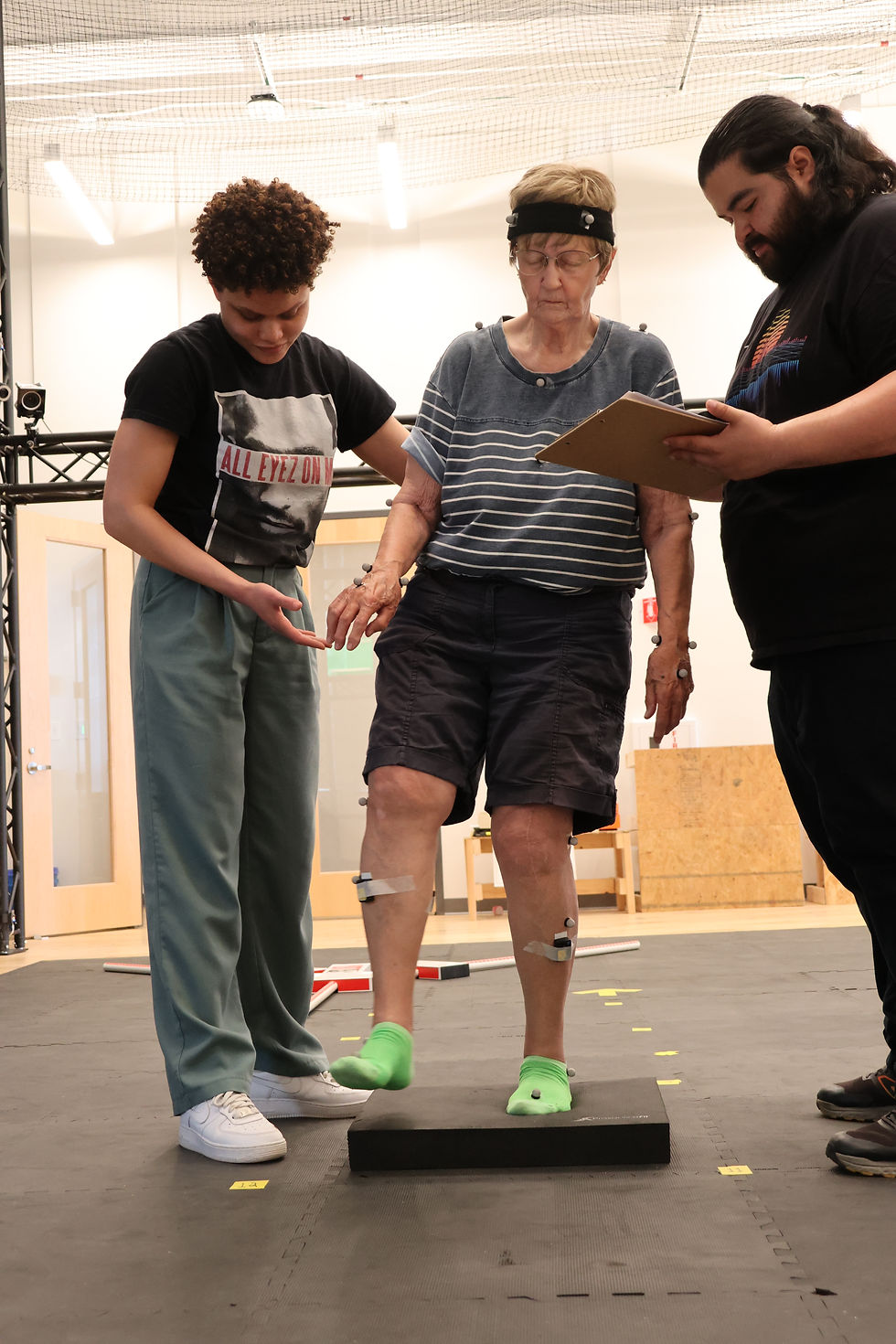

Photo by Ed Brennen

Photo by Ed Brennen

We use cutting-edge equipment, such as motion capture and forceplate, to collect data on human movement (kinematics) and forces (kinetics)
what We do
_edited.jpg)
We use a variety of instrumentation, from EMG to virtual reality headsets, to collect human data tied to electric muscle activity and eye tracking

Who we Are
The lab consists of a PI, staff, graduate student research assistants (RAs), and undergraduate student RAs, Graduate RAs are professionals studying to get their masters or doctoral degrees. A major part of their curriculum is completing research or thesis projects. A number of undergraduate RAs, are trained in experimentation, assisting with data collection or data processing and analysis. A few of these students even have their own research projects. Our students receive support from the PI and staff, there to cultivate ideas, projects, and research.


Photo by Ed Brennen
